
In allergen management and multi-product lines, the problem is rarely a lack of cleaning, but rather an over-reliance on designs that trap product where you can’t see it.
In the food industry, there is an invisible enemy that keeps Quality Managers and Plant Managers up at night: cross-contamination.
We know that managing a mono-product plant is deceptively simple. But the reality of today’s market demands flexibility: today you manufacture with gluten, tomorrow without it. In the morning you process nuts, in the afternoon an allergen–free recipe.
In this scenario, a gram of powder retained in the wrong place is not just production shrinkage. It is a critical food safety risk, a potential product recall, and a direct blow to your brand’s reputation.
The problem is that many facilities are designed under the dangerous concept of “theoretical cleaning.”
Índice
1.What is “Theoretical Cleaning”?
It is the promise that, on a CAD drawing, the system is self-cleaning or easy to sanitize.
The engineer draws the line, places the CIP (Clean In Place) systems, and assumes that air or water will reach every corner.
However, paper accepts everything. The reality of the plant does not.
When we get down to the factory floor, we find the truth:
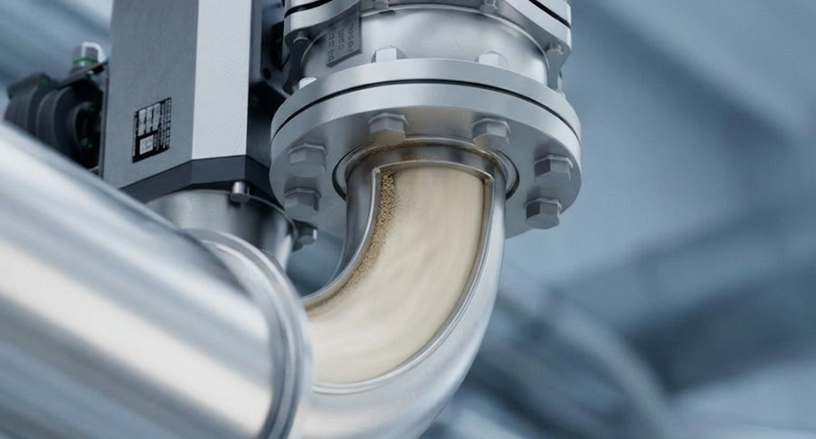
- Pneumatic conveying elbows with dead angles where powder accumulates and “cements” with humidity.
- Butterfly or rotary valves with gaskets acting as product traps.
- Cyclones and filters with shadow zones unreachable by the cleaning system.
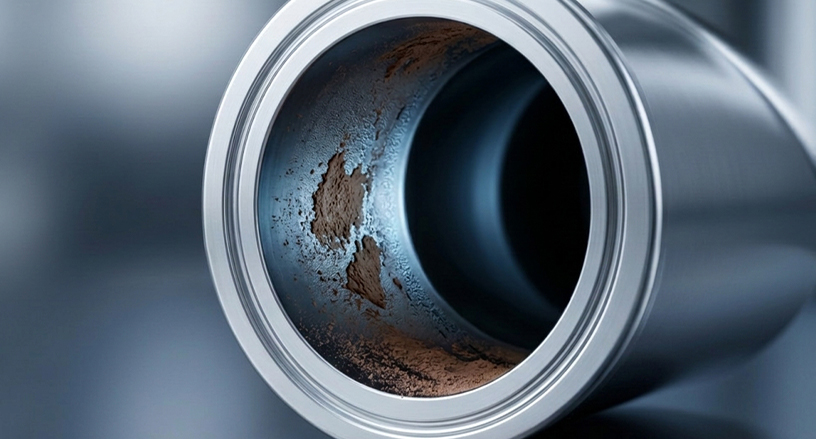
If the design allows the product to hide, cross-contamination is not a possibility: it is just a matter of time.
2. The 3 critical points where contamination hides
Based on our experience auditing and reconditioning lines, these are the places where “theoretical cleaning” tends to fail spectacularly:
1. Pneumatic Conveying and its “Traps”
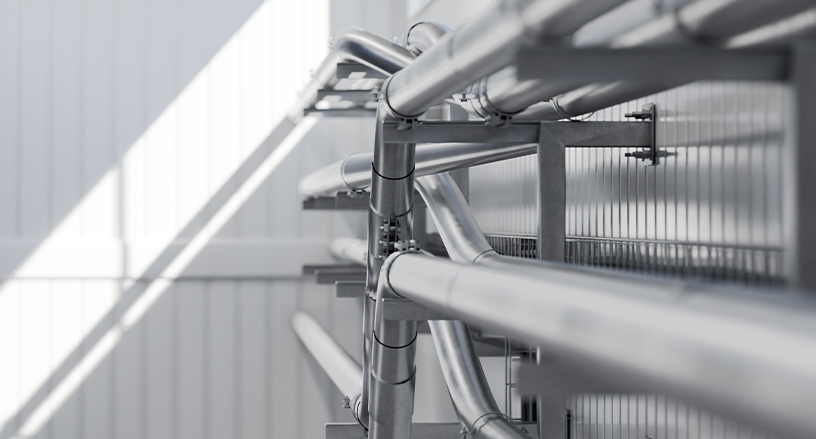
Pneumatic conveying is efficient, but if not designed with strict hygienic criteria, it is a superhighway for allergens. The main risk lies in retentions in elbows and diverters. A standard design creates turbulence that deposits fines on the walls.
The Gashor Solution: We design routes with fluid geometries and use quick-disassembly systems at key points for real visual inspection.
2. Dead Zones in Mechanical Equipment
Sifters, screw conveyors, and bag dischargers often have “blind spots.” Right angles, rough welds, or poorly sealed shafts where old product gets trapped.
When changing batches, vibration dislodges that old residue, contaminating the new production.
The Gashor Solution: Engineering with polished surfaces, continuous sanitary welds, and the radical elimination of right angles in the product flow.
3. Impossible Accessibility
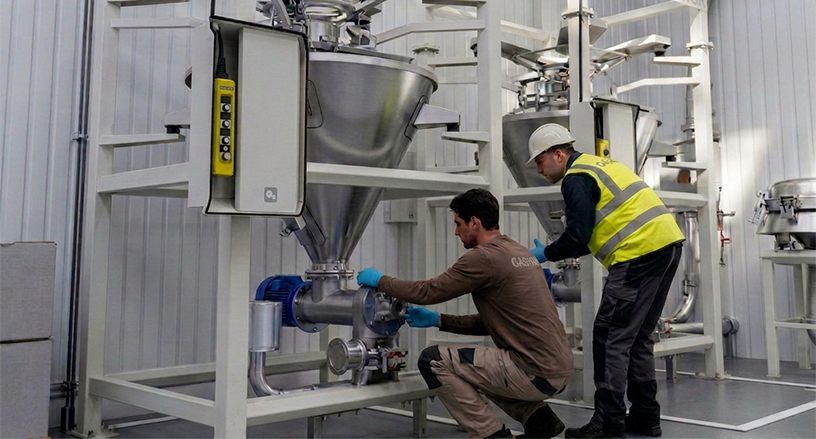
This is the human factor. If an operator needs a ladder, two wrenches, and 45 minutes to dismantle a valve for cleaning… that valve will not be cleaned properly on a daily basis. Operational haste always wins.
The Gashor Solution: Equipment designed to be disassembled manually (tool-free) or with minimal tools. We turn deep cleaning into a quick task, not an odyssey.
3. The 4 real dangers of not doing it right
Ignoring retentions and accessibility exposes you to four critical risks:
- The audit risk: This is the most immediate headache. If your installation is not dismantleable or has blind zones, you cannot guarantee cleanliness to a demanding auditor. A serious “Non-Conformance” can paralyze your commercial operations.
- The food risk (cross-contamination): This is the technical failure. Mixing traces of a previous batch with the new one. This ruins the integrity of your product, alters flavors or textures, and forces you to throw entire batches into the trash (direct cost).
- The risk to people (public health): This is the ethical and legal failure. When talking about allergens (gluten, nuts, dairy), a cleaning failure is no joke. Putting a contaminated product on the market can have fatal consequences for the final consumer.
- The brand risk (reputation): This is the strategic failure. A food alert or a product recall is any General Manager’s nightmare. It takes years to build a brand, and a single contaminated batch can destroy it in days.
4. The antidote: real Hygienic Design
At Gashor, when we tackle a project with Gluten-Free or allergen management requirements, we don’t just look for the machine to work. We look for Total Traceability.
Our philosophy is based on three pillars to ensure audits without surprises:
- Zero retentions: We study powder rheology to ensure that gravity and pneumatics empty the equipment 100%. No residue means no contamination.
- Real cleaning (not theoretical): We assume that something can fail, so we facilitate physical access to all parts in contact with the product. If you can see it and touch it, you can certify that it is clean.
- Contamination prevention: From line segregation to the design of aspiration systems that prevent airborne dust from settling on other lines.
5. How can we help you? Our business areas
Whatever hygiene or safety challenge your plant faces, we address it from the specific area you need:
- Gashor Consulting: Don’t know where the problem is? We audit your current installation to detect risk points, bottlenecks, and cross-contamination threats before they happen. We provide expert diagnosi
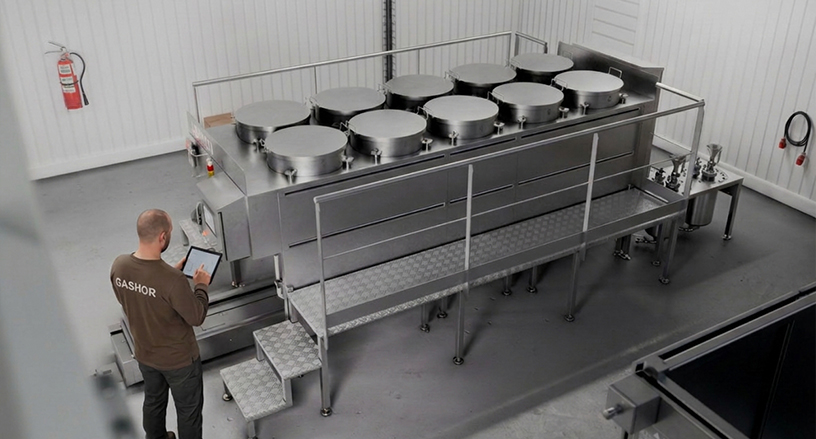
- Gashor Industry: We bring the solution to reality. We design, manufacture, and install complete plants and equipment (silos, conveying, dosing) under the strictest hygienic standards. Robust engineering that eliminates “theoretical cleaning.”
- Gashor Innovation: If your ingredient is new or particularly complex, we develop a custom solution. We test and validate processes to ensure hygiene and efficiency are maintained even with the most difficult raw materials.
- Gashor Services: Safety is a long-distance race. We support the useful life of your plant with preventive maintenance, spare parts, and technical assistance to ensure your equipment remains as hygienic and accessible as day one.
6. Conclusion: Peace of mind is profitable
Investing in engineering that prioritizes food safety is not an extra cost: it is insurance.
The cost of a stoppage due to inefficient cleaning, or worse, the cost of an allergen crisis, far exceeds the investment in correct hygienic design from the start.
Do not let “theoretical cleaning” put your real production at risk. Contact us, and we will audit your line to identify retention points and cross-contamination risks.
Let’s armor your plant’s safety together.

